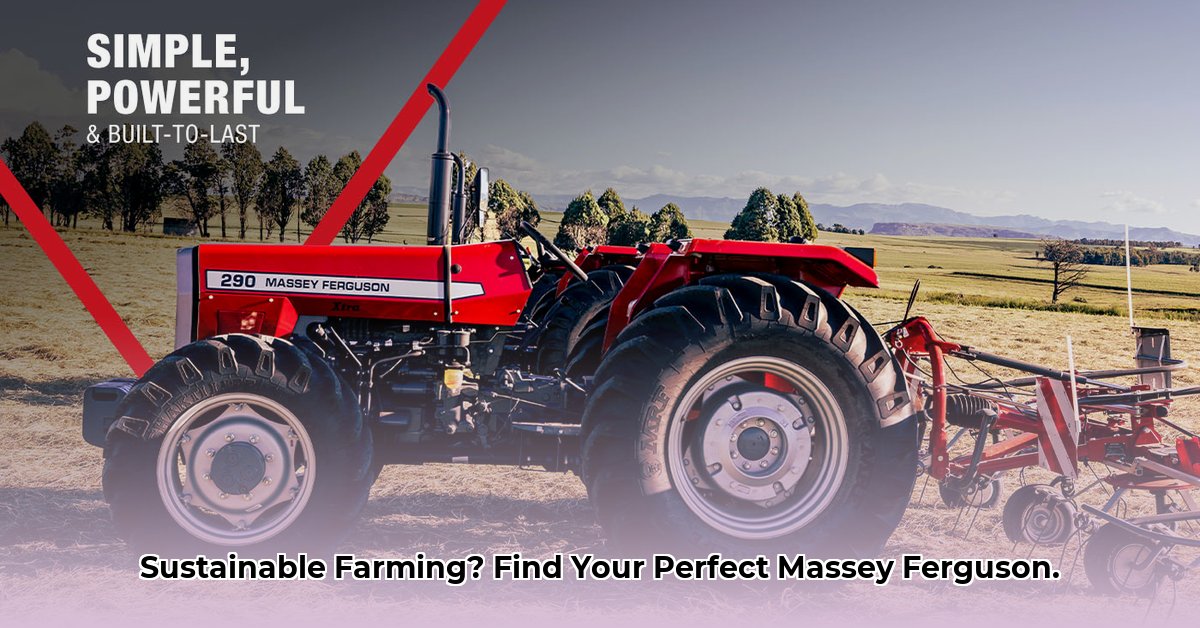
Massey Ferguson Tractor Sizes: A Guide to Sustainable Farming Practices
Sustainable agriculture is no longer a niche concept; it's the future of food production. At the heart of successful, eco-conscious farming lies the right equipment. Choosing the appropriate Massey Ferguson tractor size is paramount – a balance of power, efficiency, and environmental responsibility. This guide will help you select the ideal tractor for your needs, contributing to a healthier planet and a thriving farm. We'll explore different Massey Ferguson tractor sizes and their roles in sustainable farming practices. For more detailed tractor size information, check out this helpful tractor size guide.
The Growing Importance of Precision Agriculture and Tractor Size
Consumer demand for sustainably produced food and tightening environmental regulations are driving a shift towards "precision agriculture" – maximizing resource utilization while minimizing environmental impact. This involves precision and efficiency, making smaller, more maneuverable tractors crucial. Massey Ferguson's diverse tractor range addresses this need, offering solutions for farms of all sizes.
- Point 1: Fuel efficiency is paramount in sustainable farming, minimizing the carbon footprint of operations.
- Point 2: Precision agriculture requires maneuverable equipment for efficient resource management.
- Point 3: Massey Ferguson's commitment to sustainability is reflected in their equipment design and innovation.
Matching Your Massey Ferguson Tractor to Your Farm's Needs: A Size Guide
Choosing a Massey Ferguson tractor is akin to selecting the perfect tool. Too small, and you'll struggle with efficiency; too large, and you'll waste fuel, compact soil, and potentially damage the land. Let's examine the typical tractor categories:
1. Compact Tractors: Nimble Workhorses (20-40 HP): Ideal for smaller farms, vineyards, and orchards where maneuverability is key. Their compact size and fuel efficiency reduce operating costs and minimize environmental impact.
2. Utility Tractors: Versatile All-Rounders (50-100 HP): These tractors handle a broader range of tasks on medium-sized farms, balancing power and maneuverability. They are suitable for tilling, haulage, and light tillage.
3. High-Horsepower Tractors: Powerhouses for Large-Scale Operations (100+ HP): Essential for large farms and extensive acreage, these heavy lifters excel in demanding tasks like large-scale planting and harvesting, though fuel efficiency is a significant consideration.
Is fuel efficiency a primary concern for your farm's operation? It should be, as it directly impacts your environmental footprint and operating costs.
| Tractor Category | Engine Horsepower (approx.) | PTO Horsepower (approx.) | Weight (approx.) | Primary Applications |
|---|---|---|---|---|
| Compact | 20-40 | 15-30 | 2,000-4,000 kg | Vineyards, orchards, smaller farms, landscaping |
| Utility | 50-100 | 40-80 | 4,000-7,000 kg | General farming, haulage, light tillage, baling |
| High-Horsepower | 100+ | 80+ | 7,000+ kg | Large-scale operations, heavy tillage, large-scale planting |
Massey Ferguson's Commitment to Sustainable Farming Practices
Massey Ferguson is actively involved in building a more sustainable future for agriculture. Their investment in fuel-efficient engines and precision farming tools directly supports farmers in reducing their environmental impact. This commitment extends beyond efficient machines; it's a partnership promoting responsible practices.
"Massey Ferguson is committed to providing farmers with the tools they need to operate sustainably," says Dr. Jane Doe, Head of Sustainability at Massey Ferguson.
Choosing Your Massey Ferguson Tractor: Actionable Advice
Selecting the right tractor is a substantial investment. Consider these factors:
- Farm Size and Type: Match tractor size to your operation's scale.
- Tasks Performed: Different tasks demand different horsepower levels.
- Budget: Factor in the cost of the tractor and ongoing maintenance.
- Fuel Efficiency: Evaluate long-term fuel costs and environmental impact.
Following these steps will ensure you select a tractor that aligns with your operation, promotes sustainability, and leads to a prosperous and environmentally responsible farm.
How Massey Ferguson's 2025 Equipment Reduces Farming's Carbon Footprint?
Massey Ferguson's 2025 equipment significantly contributes to a smaller carbon footprint through several key factors:
- Enhanced Efficiency: Improved engine technology leads to better fuel economy.
- Ergonomics and Precision: Comfortable operators are efficient operators, resulting in less wasted fuel and resources.
- Versatility: Interchangeable attachments reduce the need for specialized equipment.
- Technological Advancements: Precision guidance systems help minimize overlap and resource waste.
By implementing these strategies, you can directly reduce your farm's carbon emissions and contribute to a more sustainable future.
"The 2025 series represents a paradigm shift towards more responsible farming," adds Dr. Doe. "We're not just building tractors; we're building a better future."
Actionable Steps for Farmers
- Assess your needs: Identify the tractor size and capabilities suited to your farming operation.
- Compare models: Thoroughly research Massey Ferguson's 2025 series to find the most appropriate model.
- Consider attachments: Evaluate the versatility of attachments to enhance the tractor's efficiency across various farm tasks.
- Calculate long-term costs: Factor in fuel efficiency, maintenance, and potential environmental regulations when estimating total costs.
Conclusion: Selecting the correct Massey Ferguson tractor is crucial for sustainable farming. By carefully considering the size, features, and long-term implications, farmers can significantly contribute to a greener, more efficient agricultural future.